


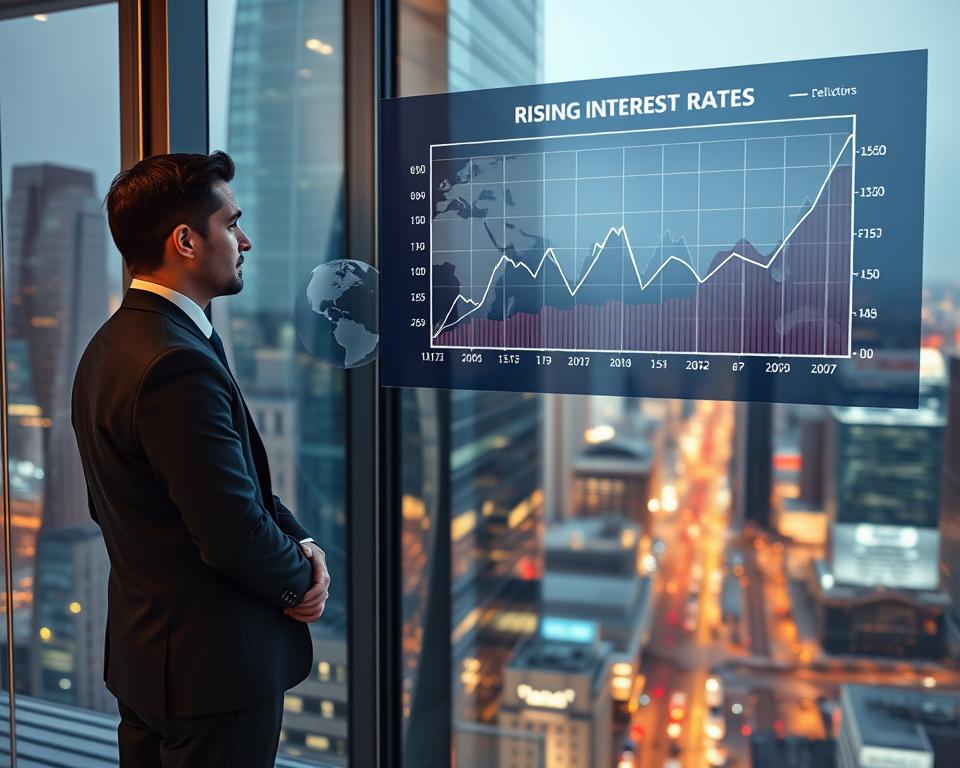
I remember the 2008 financial crisis well. Interest rate trends were key in shaping the global economy. Understanding economic cycles is vital for predicting future changes.
Central banks use interest rates to control the economy. Changes in these rates affect many areas, like spending and investments. Looking at the big picture is key when studying these cycles.
By looking at past and present interest rates, we can see the global economy’s future. This knowledge helps us make better choices, whether you’re investing, making policies, or just keeping up with news.
Key Takeaways
- Understanding interest rate trends is key for predicting economic shifts.
- Central banks use interest rates to control the economy.
- Changes in interest rates have big effects.
- Knowing history helps us understand the future economy.
- By studying current interest rates, we can make informed decisions.
Introduction to Interest Rate Cycles
Understanding interest rate cycles is key to seeing how money policy affects the economy. Central banks set interest rates to control inflation, manage jobs, and keep the economy stable.
Exploring interest rate cycles shows these rates are not random. They are set through a complex process using many economic signs and forecasts.
Definition of Interest Rates
Interest rates are the cost of borrowing money. They are the price borrowers pay lenders for using their money for a time. Central banks, like the Federal Reserve in the United States, set these rates to guide the economy’s direction. They decide to raise or lower rates based on inflation, jobs, and economic growth.
How Interest Rates are Set
Setting interest rates is a careful process. Central banks use tools like short-term interest rates to meet their goals of full employment and price stability. For example, when inflation is low and jobs are scarce, they might lower rates to boost growth by making loans cheaper.
On the other hand, when the economy is booming and prices are rising, they might raise rates. This helps slow down the economy and prevent it from overheating. This balance is vital for keeping the economy stable and is a core part of money policy effects.
Knowing how interest rates are set and what influences central bank choices helps people and businesses. It lets them make better financial choices in the economic world.
Historical Overview of Interest Rate Changes
The history of interest rate changes offers insights into their impact on economic growth patterns. Looking back helps us understand how rates have shaped the global economy.
Central banks have used interest rates as a key tool to manage the economy. Over time, these rates have changed a lot, affecting many parts of the economy.

Notable Rate Hikes and Cuts
There have been many important times when rates went up or down. For example, in 2008, the Federal Reserve cut rates to almost zero to boost the economy. In the 1980s, the Fed raised rates to fight high inflation.
These moves have had big effects on the economy, influencing global financial market influences. Knowing about these events helps us understand today’s economic situation.
Economic Contexts of Past Cycles
The economic settings of past interest rate cycles have been different. Things like inflation, job numbers, and global trends have shaped these cycles.
For example, when inflation is high, central banks raise rates to slow spending and keep prices stable. But when the economy is slow, they lower rates to encourage people to borrow and spend.
- Rate hikes are often used to control inflation.
- Rate cuts are typically used to stimulate economic growth.
- The timing and magnitude of these changes can have significant effects on the economy.
By studying these past contexts, we can better understand how interest rate changes affect the global economy. This helps us make more accurate predictions about future trends.
The Role of Central Banks in Rate Decisions
Central banks are key players in the global economy. They make decisions on interest rates. These decisions affect borrowing costs, spending, and investments, shaping the economy.
Federal Reserve’s Influence
The Federal Reserve is the central bank of the United States. It sets monetary policy and influences the U.S. and global economies. The Fed uses tools like open market operations to make its decisions.
When the Fed raises interest rates, it can strengthen the dollar. This can impact global trade, as explained in an article on Investopedia.
The Federal Reserve’s actions affect more than just the U.S. They influence international trade and financial markets. Its decisions can also affect other central banks, creating a global ripple effect.
Other Global Central Banks
Other central banks worldwide are also key players. The European Central Bank, the Bank of England, and the Bank of Japan make important decisions on interest rates.
| Central Bank | Primary Objective | Monetary Policy Tool |
|---|---|---|
| Federal Reserve (U.S.) | Maximize employment, stabilize prices | Interest rates, open market operations |
| European Central Bank (EU) | Maintain price stability | Interest rates, quantitative easing |
| Bank of England (U.K.) | Maintain price stability, support government economic policy | Interest rates |
These central banks use tools like interest rates and quantitative easing to meet their goals. Their decisions are important for their economies and the global economy.
How Interest Rates Affect Consumer Behavior
Interest rates play a big role in how people spend and save money. They change how we borrow and save, affecting the whole economy.
Borrowing and Spending Patterns
Low interest rates make borrowing cheaper. This means people are more likely to buy big things like homes and cars. It also means they spend more, helping the economy grow.
But, when interest rates go up, borrowing gets pricier. This can make people borrow and spend less. This might slow down the economy.
For example, when rates are low, people might use credit cards more. But, when rates rise, credit card debt gets more expensive. This might push people to pay off their cards or look for cheaper loans.

Savings Rates During Rate Fluctuations
Interest rates also affect how much we save. When rates are high, saving is more appealing because you can earn more. This can make people save more, as they want to take advantage of the higher returns.
But, when rates are low, saving might not seem as rewarding. People might look for other investments that could earn more, like stocks or real estate. These options, though, come with risks.
In summary, interest rates greatly influence how we borrow, spend, and save. Knowing this helps us make better financial choices. It also helps policymakers manage the economy better.
Impact on Business Investment Strategies
Businesses need to adjust their investment plans due to changing interest rates. These changes affect how much it costs to borrow money. Companies must make smart investment choices based on the current economic situation.
The cost of borrowing is key in deciding how to invest. Low interest rates make borrowing cheaper, encouraging more investment. But, high rates make borrowing more expensive, which can slow down investment.
Cost of Capital Considerations
The cost of borrowing is very important for business investment plans. Companies must think about how much it costs to borrow money compared to the returns they might get. A lower cost of capital can make investing in big projects more appealing. But, a higher cost might make companies more careful with their investments.
For example, when interest rates are low, businesses might invest in long-term projects like building new infrastructure or research. But, when rates are high, they might choose to invest in projects that give quick returns.
“The cost of capital is a key factor in investment decisions. Companies need to understand the current interest rates to make smart choices.”
Long-term vs Short-term Investments
Businesses also need to think about the difference between long-term and short-term investments. Long-term investments cost more upfront but can pay off big in the future. Short-term investments cost less but offer quicker gains, but they might not have as big of an impact in the long run.
| Investment Type | Characteristics | Interest Rate Impact |
|---|---|---|
| Long-term Investments | Higher upfront costs, big returns over time | More affected by interest rates, as they often require a lot of borrowing |
| Short-term Investments | Quick returns, lower costs upfront | Less affected by interest rates, as they usually have shorter borrowing periods |
In summary, changes in interest rates have a big impact on business investment strategies. Companies must think about the cost of borrowing and the differences between long-term and short-term investments. This helps them deal with the challenges of the global financial market and economic growth patterns.
Interest Rates and Inflation Dynamics
It’s important to understand how interest rates and inflation are connected. This helps us see the big picture of economic policy.
Interest rates and inflation are closely tied. Low interest rates make borrowing cheaper, leading to more spending and higher prices. On the other hand, higher interest rates make borrowing more expensive, which can slow spending and lower prices.
Relationship Between Rates and Inflation
Central banks, like the Federal Reserve, adjust interest rates to control inflation. Raising rates can reduce demand and lower inflation. Lowering rates can boost the economy but might lead to higher inflation if growth is too fast.
Several factors affect this relationship:
- Economic growth indicators
- Employment rates
- Consumer spending patterns
Impact on Purchasing Power
Inflation erodes the value of money, making it harder to buy things. This is a big worry for those on fixed incomes or with savings that don’t keep up with prices.
Inflation’s effect on buying power is seen in many areas:
| Economic Indicator | Low Inflation | High Inflation |
|---|---|---|
| Purchasing Power | Remains relatively stable | Decreases as prices rise |
| Consumer Spending | Encouraged as prices are stable | May decrease as prices rise |
| Savings | Value is maintained | Value erodes over time |
Raising interest rates to fight inflation can help. It reduces money in the economy, which can stabilize prices and keep buying power.
Currency Value Fluctuations
When interest rates change, so does the value of currencies. This affects global trade and financial markets a lot. I will look into how these changes impact the world economy.
Interest Rates and Currency Strength
Interest rates and currency strength are closely linked in international finance. If a country’s interest rates go up, it attracts more foreign investors. This makes its currency stronger.
But, if interest rates drop, the currency value falls. Investors then look for better returns elsewhere.
Higher interest rates make a currency more appealing. This increases demand for it, making its value go up. But, this can also have downsides. It helps savers but might slow down borrowing and spending.
Effects on Global Trade
Currency value changes affect global trade a lot. A strong currency makes a country’s exports more expensive. This can lower demand and hurt domestic industries.
But, a weak currency makes exports cheaper. This boosts trade.
Global trade dynamics are also influenced by currency strength. For example, a strong US dollar makes imports cheaper in the US. A weak dollar, on the other hand, helps US exports.
I will keep studying these effects. This will help us understand the bigger picture for the global economy and financial markets.
Interest Rate Cycles and Stock Markets
It’s key for investors to grasp the link between interest rates and stock markets. The stock market’s success is tied to interest rate cycles. These cycles sway investor mood and stock performance.
Investor Sentiment and Stock Performance
Interest rate changes guide investor choices. Lower rates make borrowing easier, boosting stock investment. But, higher rates draw investors to bonds, lowering stock prices.
Investor sentiment shifts with economic signs tied to rate changes. Rate hikes might signal a strong economy but also hint at inflation worries.

Historical Trends During Rate Changes
Stock markets have varied in response to interest rate cycles over time. Looking at past trends helps predict stock behavior during rate changes.
| Rate Change | Average Stock Market Response | Notable Trends |
|---|---|---|
| Rate Hike | -5% initial drop, followed by recovery | Sector rotation towards financials |
| Rate Cut | +7% initial gain, sustained growth | Increased investment in growth stocks |
By studying these trends, investors can handle the stock market’s ups and downs better.
Global Economic Interconnectivity
The global economy is deeply connected, with U.S. interest rates playing a big role. As the world’s largest economy, the U.S. affects financial markets worldwide. Its monetary policy decisions send ripples across borders, shaping economic conditions elsewhere.
How U.S. Rates Affect Other Countries
When U.S. interest rates change, it can make the dollar stronger or weaker. This affects exchange rates and trade balances globally. For example, a higher rate can attract foreign investment, making the dollar stronger and harder for emerging markets to pay their dollar debts.
This can cause investors to leave emerging markets for the U.S., shaking their financial systems. But, lower U.S. rates can make the dollar weaker. This makes it easier for emerging markets to pay their dollar debts.
Emerging Markets Response to U.S. Rates
Emerging markets are very sensitive to U.S. interest rate changes. They rely on foreign capital and have a lot of dollar-denominated debt. When U.S. rates go up, these markets often raise their own rates to stay competitive or intervene in currency markets to keep their exchange rates stable.
For instance, when the U.S. raised rates from 2015 to 2018, many emerging markets saw capital leave. Countries like India and Brazil raised their rates to stop the outflow and stabilize their currencies.
Central banks in emerging markets keep a close eye on U.S. monetary policy. Their responses can greatly affect their economies. The relationship between U.S. rates and emerging markets shows how complex global economic connections are.
Challenges for Policymakers
In the world of interest rates, policymakers face big challenges. They must balance different economic needs. They need to manage how their decisions affect economic growth.
Balancing Growth and Inflation
One big challenge is balancing growth and controlling inflation. Low interest rates make borrowing cheap, which boosts spending and growth. But, this can also cause inflation if the economy grows too fast.
High interest rates make borrowing expensive, which slows spending and helps control inflation. But, if rates get too high, they can slow down growth. So, policymakers must find the right balance between these goals.
Tools to Manage Economic Impact
Policymakers have many tools to manage the economy. They use forward guidance to share their future plans. This influences market expectations. They also use quantitative easing to buy assets and add liquidity to the economy.
These tools help reduce the negative effects of interest rate changes on growth. For example, during downturns, quantitative easing can help by making more funds available for lending and investment.
The success of policymakers depends on their ability to adapt to economic changes. They must keep their focus on the overall economic goals.
Future Trends in Interest Rate Cycles
Understanding future trends in interest rate cycles is key for investors, policymakers, and consumers. I will look at predictions for the next decade and what will shape these trends.
Economic Forecasts for the Next Decade
Experts predict that interest rates will change based on global economic conditions. This includes inflation rates, employment figures, and world events. The Federal Reserve and other central banks will be important in setting these trends through their policies.
Key Factors Influencing Rate Decisions
Several things will affect future rate decisions. These include financial stability trends, economic growth, and inflation expectations. As the world’s economies link more, changes in interest rates in one country can affect trade and markets worldwide.
Knowing these trends and what drives them helps us prepare for the global economy’s future. It leads to better decision-making in financial stability trends.